Showing posts with label technology. Show all posts

Saturday, July 17, 2010

Driver Wheel Personal Transport Concept Looks Dangerous; May not be! [Driver Shows You What The Wheel Inside The Wheel of a Motorcycle-Like]

If all this noise 2010 MWC make you want to take a break from all cell phone and smartphone news that flying through the Internet these days then I would be the ideal tool is supposed to take your mind off the Wonderland presented at the Mobile World Congress .
Wheel Inside, motorcycles, motorbik, Rider wheel, Automobile,   Technology,  Driver Wheel
The wheel of the concept of personal relief rider yamaha1


This concept of personal transport like motorcycles but it is not. It does not appear on the wheel motorcycle but it's not that either. We are looking at Ryder wheel, a device that can reduce personal manufactured by Yamaha, or some other similar companies, at a time in the future, too far away.

Rider at the wheel looks like a really dangerous machine to ride, but it probably will not be life-threatening and we imagine it to be. Rider wheel consists of three layers, outer body, which resembles a small motorcycle wheel, the wheel itself up to a person standing, and then home, where one can find an area to sit and controls.
Wheel Inside, motorcycles, motorbik, Rider wheel, Automobile,   Technology,  Driver Wheel
The wheel of the concept of personal relief rider yamaha2

Really like to see one of these children to work and we will be particularly interested in how that works out the entire crew. And can ride a motorcycle rather complex if one does not manage his or her balance during the flight physical. How can one be able to transport a vehicle that does not in fact allow you see the surrounding areas? How can the preservation of one passenger wheel in a timely and expeditious manner without the knowledge of the different at all times what is happening around him?

Perhaps inside the cockpit, we could find all kinds of tools and equipment means interesting, to help us to see the front and around us. Or perhaps will be to run a program automatically run the wheel from the outside by the same road with a computer to control speed, balance, and other features of the whole flight.
Wheel Inside, motorcycles, motorbik, Rider wheel, Automobile,   Technology,  Driver Wheel
The wheel of the concept of personal relief rider yamaha3

It will be until the driver of the wheel will be available in stores at the same time so we can focus on the technology available immediately, such as brand new phones found in Barcelona, Spain, the Convention on migrant workers in these days.

Reading: Wheel and the concept of driver and transport of hazardous personal insights; may not be! [Driver shows you what the wheel inside the wheel of a motorcycle-like] »TFTS - Technology, tools and curiosity

Friday, March 12, 2010

Concept Car : BMW Vision EfficientDynamics 2010

For decades, BMW has made the reduction of emissions and fuel consumption a key part of its product development strategy, just as enhancements to the dynamic ability of each BMW have been a lasting, sustained brand value. BMW’s EfficientDynamics engineering philosophy – the pursuit of an enhanced, athletic driving experience while simultaneously lowering the consumption and emissions of each vehicle – resulted in the most dramatic drop in fleet consumption of any automaker from 1990 through 2005, according to an Environmental Defense study.


Now, the BMW Vision concept car clearly demonstrates that the EfficientDynamics objectives are fully compatible when applied to a sports car. Conceived as a 2+2-seater with plug-in full-hybrid technology, this unique car combines the performance of a BMW M vehicle with a standard of fuel efficiency and emission management that exceeds even the current levels achieved by the latest small cars. This outstanding result is made possible by the combination of BMW ActiveHybrid components with an extremely economical combustion engine, and outstanding aerodynamic qualities.


BMW Vision EfficientDynamics is the result of a “clean-sheet” development process to ensure that the correct achievements were made in the areas of efficiency, driving pleasure, technology, and emotional design. BMW Vision EfficientDynamics is the most comprehensive implementation of the EfficientDynamics philosophy seen so far. The powertrain provides a top speed limited electronically to 155 mph, with acceleration to 100 km/h in 4.8 seconds. Average fuel consumption in the EU test cycle is 3.76 liters/100 kilometers, equal to 62.6 mpg, and the CO2 emission rating is 99 grams per kilometer. CO2 emission management is even more outstanding when driving in the all-electric mode after charging the battery from a plug-in source: Taking all emissions in the generation of electricity into account, as prescribed by the EU formula, the car’s emission rating is just 50 grams per kilometer.


Through this unique balance of driving pleasure and fuel efficiency, the BMW Vision EfficientDynamics concept car clearly demonstrates the potential of BMW ActiveHybrid technology, which makes its world debut at the 2009 Frankfurt Motor Show in the BMW ActiveHybrid X6 and BMW ActiveHybrid 7 production models.


The power and performance are made possible by combining a fuel-efficient 3-cylinder turbodiesel with one electric motor on each axle. The intelligent combination of these units, together with precisely controlled energy management, simultaneously enhances the dynamic performance and the efficiency of the car. Overall system output is 356 horsepower, and peak torque is 590 lb-ft. The special arrangement of the two motors and diesel engine allows all-wheel drive when driving in all-electric mode. The result is minimum power loss and a harmonious transmission of the power available under all conditions.


In its design, BMW Vision EfficientDynamics for the first time conveys the dynamic look of a BMW sports car to a hybrid vehicle. Developed with decades of experience in Motorsport, the body of this unique sports car is a result of intelligent lightweight technology and aerodynamic efficiency. In the design of the interior, the focus was likewise on both the fascinating driving experience and, in particular, on transparent, hands-on technology and maximum reduction of weight.


Turbodiesel engine with unprecedented specific output


The combustion engine is a cutting-edge turbodiesel featured for the first time in the BMW Vision EfficientDynamics concept car. Displacing 1.5 liters on three cylinders, the engine consistently follows the downsizing principle of using a relatively small engine combined with a turbocharger to reduce fuel consumption.


Through its compact dimensions, the 3-cylinder fits conveniently in front of the rear axle like in an agile mid-engine sports car, despite the two seats at the rear. Fuel is injected by the latest generation of High Precision Direct Injection, and the turbocharger features variable intake geometry for maximum efficiency. Engine output is 163 hp with peak torque of 214 lb-ft.


The specific output of 109 hp per liter sets a new benchmark in diesel technology. The power delivered by the turbodiesel is conveyed to the rear axle by means of a double-clutch transmission (DCT). This advanced transmission technology, which already offers a particularly dynamic driving experience in BMW’s M3 and Z4 Roadster, allows the driver to shift gears without the slightest interruption of power. BMW Vision EfficientDynamics features a newly-developed version of BMW’s DCT with six speeds for maximum efficiency and flexibility.


Two electric motors for full-hybrid drive

The combustion engine is supplemented by two electric motors. Consistently applying the BMW ActiveHybrid philosophy, development engineers followed the principle of “Best of Hybrid,” choosing the optimum combination of a hybrid synchronous motor on the front axle and a full-hybrid system at the rear.


In this concept, the driver benefits from the efficiency of the electric motors over a far wider speed range than with a conventional hybrid car. The rear axle comes with a second-generation full-hybrid system corresponding to the technology in the BMW ActiveHybrid 7 production model. The compact electric motor positioned between the diesel engine and the DCT outputs a consistent 33 horsepower and is able to reach a peak of up to 51 hp. Maximum torque for the rear electric motor is 214 lb-ft, the power, either supporting the diesel engine or in all-electric motoring. When coasting or applying the brakes, the electric motor acts as a generator and feeds electric power to the lithium-polymer battery in the car. The electric energy developed in this way is therefore captured without any additional consumption of fuel through the principle of Brake Energy Regeneration. Energy wasted on the brakes of a conventional car is thus saved within the new power system for subsequent use in driving the car.


A second electric motor acts on the front axle. This engine, a hybrid synchronous motor, offers continuous output of 80 horsepower and peak torque of 162 lb-ft. Extra power of 112 horsepower is available for a period of up to 30 seconds, and, for a 10-second “burst,” the electric motor is able to develop 139 horsepower. The power is transmitted through a 2-stage, single-speed reduction gearbox.


BMW Vision EfficientDynamics is able to run completely under electric power, with the power of the turbodiesel engine alone, or through an infinite combination of the three power sources. Depending on driving conditions, the two electric motors may be used both for accelerating and for regenerating energy when applying the brakes and while coasting. This principle ensures efficient energy management, with the charge status of the lithium-polymer battery constantly remaining within the optimum range. When accelerating, the electric motors help to boost the car for even greater performance, ensuring immediate response and a significant reduction in fuel consumption. For a short time, such as in passing maneuvers, the cumulative maximum output of all three engines increases to 356 hp, with maximum torque generated by the three engines reaching 590 lb-ft.

—-


Lithium-polymer battery for electrical energy


The energy cells featured in BMW Vision EfficientDynamics are housed in a chassis element running from front to rear through the middle of the car. The front unit is the lithium-polymer complex, an ongoing development of the lithium-ion battery. Overall, BMW Vision EfficientDynamics comes with a total of 98 lithium-polymer cells, each offering a capacity of 30 amp/hours and developing continuous output of 600 Amps at a voltage of 3.7 V. For a period of 30 seconds, each cell is even able to develop maximum output of 1,200 Amps.


Serial arrangement of the lithium-polymer cells serves to generate nominal voltage of 364 volts, the gross storage capacity of the battery is 10.8 kW/h. With an unusually high discharge capacity of 80 percent, the battery delivers 8.6 kW/h for driving the car. This superior performance comes on overall weight of the entire energy storage system of just 187 lb. A further advantage is that through their optimum dimensions tailored to the specific qualities and features of the car, the lithium-polymer cells, together with the operating strategy chosen with a concept of “forward looking” energy management, reduces the thermal load acting on the battery to such an extent that there is no need for active cooling.


Plug-in solution: convenient charging of the electric power system from a conventional power socket.


Brake Energy Regeneration captures electric power generated while driving without additional fuel consumption, which is subsequently used to supply power to the electric motors and on-board network. A further option is to connect the lithium-polymer cells to a conventional power socket for a simple and efficient charge process, using a plug-in connector in the front-right wing of the car. Connected to a standard EU power outlet (220 V, 16 Amps), the system requires a maximum of 2 ½ hours to fully charge the lithium-polymer cells. And wherever a power source with higher voltage and amperage (380 V, 32 Amps) is available, the charge time is an even shorter 44 minutes.

Friday, October 9, 2009

Concept Car : Mercedes F-CELL Roadster

Mercedes F-CELL Roadster is a fuel-cell-drive concept built by a team of 150 trainees of Daimler AG at the Sindelfingen Mercedes-Benz plant which took a year to be completed. Powered by a 1.2 kW fuel cell system located at the rear, Mercedes F-CELL Roadster will reach its top speed at 25 km/h and has a range of 350 km.

Mercedes F-CELL Roadster design is inspired by the Benz Patent Motor Car from 1886, which features a unique fiberglass front section, large spoked wheels, and also carbon-fiber bucket seats with hand-stitched leather covers. While on the front section, the design is inspired by the F1 race cars.

Mercedes F-CELL Roadster is equipped with a drive-by-wire joystick instead of a steering wheel.

In a hitherto unique project bridging various fields of profession, the trainees of Daimler AG at the Sindelfingen Mercedes-Benz plant have built a Roadster with fuel cell drive. For about a year, more than 150 trainees and dual education system students worked on the overall concept, development, assembly, and completion of the Mercedes F-CELL Roadster. This project involved junior employees from the fields of automotive mechatronics, model-building, electronics, coating technology, manufacturing mechanics, product design, and interior appointments. The prime objective of the project was to integrate the topic of alternative drive systems into training with hands-on experience.

“This project impressively demonstrates that the topic of sustainable mobility has become an integral part of our vocational training,” said Human Resources Board member and Labor Relations Manager Günther Fleig. “I am delighted to see how much initiative and creativity the young people have put into this project.”

Mercedes F-CELL Roadster uniquely combines state-of-the-art technologies with the history of vehicle construction. As an allusion to the Benz Patent Motor Car from 1886, the vehicle is fitted with large spoked wheels. Moreover, the Mercedes F-CELL Roadster incorporates stylistic elements from diverse eras of automotive history, such as the carbon-fiber bucket seats with hand-stitched leather covers and the distinctively styled fiberglass front section, based on the component from the Formula One racing bolides.

Mercedes F-CELL Roadster is controlled with drive-by-wire technology, and a joystick takes the place of a conventional steering wheel. The vehicle is powered by the emission-free fuel cell system located at the rear. With a power rating of 1.2 kW the Mercedes F-CELL Roadster reaches a top speed of 25 km/h and has an operating range of up to 350 km.

Wednesday, August 5, 2009

Concept Car : 2010 Pontiac G8 ST


The 2010 Pontiac G8 ST concept car in the picture looks remarkable. Is it a Sedan? Is it a light truck? Is it both? Whatever it is, it’s ready for SEMA. We’re going to see it later down the road, read 2009, in various dealerships too.

Here are some of the features this G8 ST will include:

  • Liquid Hot exterior color with enhanced clear coat
  • Lowered ride height
  • Custom 20-inch wheels
  • Leather-trimmed seats with red inserts
  • G8 GXP steering wheel with red inserts
  • G8 GXP shift knob with red inserts
  • Custom interior trim kit (proposed GM Accessories part)
  • Hard tonneau cover (proposed GM Accessories part)
  • 6.0L small-block V-8
  • 361 horsepower (269 kW)
  • 385 lb.-ft. of torque (522 Nm)
  • Active Fuel Management technology
  • Hydra-Matic 6L80 six-speed automatic.

Tuesday, April 28, 2009

Concept Car : The Helios Lizard


Kim Gu-Han of Universitat Dulsburg-Essen, Germany, wants to build a solar-powered car that can charge itself entirely from the sun. The problem is the limited space for photovoltaic panels on a car’s roof. The Helios overcomes that limitation by acting like a frill-neck lizard. When stationary, the off-road vehicle can unfurl a large set of photovoltaic cells to produce enough energy to run the car, with excess energy for home power. The Helios won Best Use of Technology category at the Interior Motives Design Awards 2008.

Concept Car : Eco Transportation Phoenix


Future transportation concepts give the world hopes to deliver eco-friendly vehicles that will be far better both in technology and looks. However, all this exists conceptually and we are still not near any such technology that could provide high-speed sporty vehicles with zero emission electric engines. Phoenix is another such conceptual design for American urban life. This machine is in itself a try to blend freedom, strength, and flexibility, with a special concern to our gradually deteriorating environment. Design seems to be inspired from American muscle cars and pick-up trucks. This two-seater car derives power from Flexi-Fuel V8 engine. Not only engine but the bio-composite material and recycled aluminum used in body are other important aspects that make it soft toward the environment.


The tough and agile design incorporates a safety cell made from reinforced bio-polymers with roll-bars behind each seat to provide additional protection. An Orbital Omni-directional four-wheel-drive system makes it capable of rotating around its own axis and sideways. All this sounds fantastic and do go with its name that is inspired by an ancient mythical bird, except that it can’t fly.

Thursday, April 23, 2009

Concept Car : MOY


The contest winner, MOY concept car was designed by Elvis Tomljenovic received first price in contest held during auto(r) automotive design conference in Zagreb, Croatia. Elvis Tomljenovic is student of the Zagreb School of Design. Elvis Tomljenovic is finishing student of the Zagreb School of Design. He is currently looking for sponsors/scholarships to continue education in field of automotive design at postgraduate level.


MOY concept is made for generation who uses technology as a means to express themselves and communicate with others. The idea behind MOY concept is that everyone can design their own car on their own computer and then apply the design to the vehicle using wireless data transfer or share it with other people through web-site, forum, e-mail etc. To those who lack the necessary skills or time to create their own design, we offer the option of downloading ready made designs. The vehicles are interconnected, so the change is possible in motion. Movement recognition technology enables us to draw on the car in real time.


Since MOY can display both static images and videos, it can be used as a new medium of promotion. Vehicle is powered by batteries that charge electro motors set in wheels and controlled by drive-by-wire technology. The body of the car is made of outer and inner polycarbonate layers, with layers of liquid crystals, LED diodes and electro chromic foil (film) in between.


auto(r) is the biggest automotive design conference in Europe in 2009 and the first ever held in South East Europe (SEE). The conference theme: “Professional automotive designers from SEE”, born or originated. This is the first time ever that this subject has been taken to the public. A title auto(r) has been chosen because it combines two words - automobile and author. Our mission is to present designers as authors of automobile designs.


Thursday, April 16, 2009

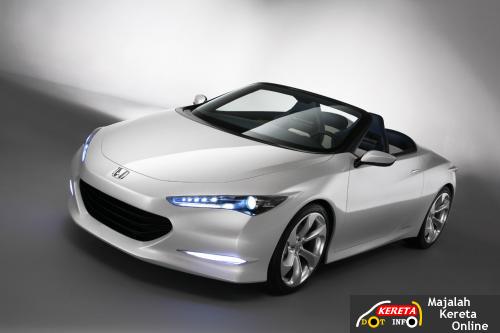
Concept Car : HONDA S2000 OSM HYBRID TECHNOLOGY


Honda is doing a straight 180 on the next S2000, judging by the concept car revealed at the BIMS today. The Honda S2000, a dynamic marvel with that screaming 2.0-litre engine and excellent short-throw 6-speed gearbox, has been due for a new model for some time now, as rivals keep bettering their offerings. The concept uses Honda’s hybrid technology, although our feeling is this would not be the engine of choice when the street car debuts.


Featuring integrated rear lights, a flowing bodyline and a shape clearly related to the Civic hatch, the S2000 concept seems to have been shortened and its stance widened. There seems to be a lot of flow in the lines, giving the car cleaner, more seamless looks. Interior again, is a Civic relative of some note, peppered with blue background lighting, digital speed readout and utility buttons. And the concept is no longer a roadster; we see space for two baby hobbits at the back. No sign of where the roof goes though, and none of whether said roof is made of canvass or tin either.


Honda says that the OSM roadster on display at the 2008 British Motor Show is merely a design study, but given that “design study” is frequently a euphemism for “future design language,” we wonder if we’re seeing the next iteration of Honda car styling. Frankly, we hope so, because this is worlds better than what we’ve seen from the automaker of late, from the Accord right on up to the bland and bloated Pilot. The OSM, short for Open Study Model, is a shapely two-seat convertible that we’d be happy to drive today. Well, maybe with headlamps that weren’t lightsaber-sized. Other than that, we love the jaunty look, especially in back, where the taillamps sweep gently from one side of the car to the other. Since it’s a styling exercise, there’s no specific powertrain combination associated with it, but Honda assures us that the car is an indication that lightweight, low-emissions motoring needn’t be boring.


No kidding, guys. Inside, the cockpit basically evolves the two-tier instrument panel you’ll find in the current Civic into a far more attractive driving environment that we hope to see in road cars sooner than later. While Honda says there’s no plan to create a production sport/econo roadster like this anytime soon, somebody’s obviously thinking about it. Future S2000 replacement, maybe? “Design studies” such as this don’t happen by accident.

Friday, April 10, 2009

Concept Car : Ford iosis MAX

Ford iosis MAX concept is a Multi Activity Vehicle (MAV) which has been premiered by Ford in Geneva Auto Show.

Ford iosis MAX concept is based on a fresh interpretation of Ford’s kinetic design form language and expressing the company’s direction for its following C-cars model range.

Ford iosis MAX is powered with a 1.6-litre 180PS four-cylinder petrol engine from the EcoBoost family that features turbocharging and direct injection. With the engine, Ford has found out that the Ford iosis MAX has a 125g/km CO2 emissions level.

Ford iosis MAX comes with a set of new advanced aerodynamics, lightweight materials, and new door opening concepts.


Press Release
Ford will unveil a head-turning concept car at the 2009 Geneva Motor Show, to express the design direction for its next generation of global C-cars.

The Ford iosis MAX features striking exterior and interior treatment based on a fresh interpretation of Ford’s kinetic design form language. It is a dynamic Multi Activity Vehicle (MAV) and showcases new levels of efficiency and flexibility.

Styled by a team led by Martin Smith, Ford of Europe’s executive design director, the car’s dramatic looks and striking pearlescent ‘Limelight’ color are complemented by innovative solutions which enhance its practicality and environmental performance.

Ford iosis MAX showcases new door opening concepts, lightweight materials, advanced aerodynamics, and a preview of the European development of Ford’s global EcoBoost petrol engine technology coming in 2010.


Coupled to this clean and lean engine are the recently introduced and acclaimed Ford PowerShift transmission, plus a new Ford Auto-Start-Stop system also due for production in 2010.

“The Ford iosis MAX marks the next stage in the evolution of kinetic design, and showcases a number of affordable engine technologies that will make a difference to the environment and our customers’ pockets,” says Martin Smith, Ford of Europe’s Executive Design Director.

“Our designers have stretched themselves beyond the two previous iosis concepts, and have applied kinetic design form language to a MAV,” adds Smith. “The Ford iosis MAX proves that cars in the compact MAV class can have emotive, dynamic styling without sacrificing their traditional virtues of practicality or efficiency – something that the larger and revolutionary S-MAX has already demonstrated.”

“Although the iosis MAX isn’t a forerunner to a specific production vehicle, it clearly highlights how kinetic design is evolving and can be applied with stunning results to all vehicles in the Ford portfolio.”


Ford iosis MAX Concept - Exciting, dynamic design

The design team sought to create a strong impression of lightness and efficiency. This was achieved through the concept’s sleek, coupe-like side profile, which provides a clear contrast to the more boxy approach adopted by many vehicles in the compact MAV segment.

The feeling of lightness is reinforced by the extensive use of glass in the vehicle, with the steeply raked front screen flowing back in one piece to the tailgate, revealing the skeletal roof structure underneath.

The front of the Ford iosis MAX is dominated by the bold trapezoidal lower grille, which is now a key part of the Ford brand identity. For the first time, however, the grille features a distinctive new treatment with three horizontal chrome-rimmed bars, giving the vehicle’s face a more dynamic and imposing feel. The C-pillars, with their highly original ‘flying buttress’ design, also deliver significant functional benefits. The pillars act as spoilers, channelling airflow as close as possible to the tailgate glass for optimum aerodynamic efficiency.


The pillars work in combination with the dramatic looking aerodynamic spoiler which is centrally mounted at the rear of the roof structure, with its wings cantilevered above the tailgate glass.

Imaginative details catch the eye all around the vehicle, including the striking new graphics for the front and rear lamps, stylish LED lighting strips in the rocker panels, and stunning 19-inch alloy wheels with a lightweight two-piece construction.


Ford iosis MAX Concept - Dramatic interior environment

The iosis MAX interior presents a bold evolution of the kinetic design language used on the exterior, incorporating dynamic shapes and advanced materials to create an interior environment which is light, spacious and expressive

A key part of the Ford iosis MAX interior concept is the spine-like bridge which runs the full length of the interior from the bulkhead through to the rear load area.

The bridge supports the center console, and provides a mounting point for the four individual seats and central armrests. The seats are cantilevered from the bridge, allowing for an uninterrupted floor space and giving occupants the sensation that they are ‘floating on air’.

The colors selected for the interior were chosen to complement the striking ‘Limelight’ of the exterior. Different tones of luminous natural greys feature on most interior surfaces. Small details are picked out in a bright acidic yellow to add visual impact and stress the dynamic, sculptural character of the shapes and graphics

The innovative use of shapes and materials is also reflected in the center console, which has a smooth plexiglass surface that rolls down from the instrument panel like a ribbon and flows through to the rear of the passenger compartment.

The whole of the console surface acts as a touch-screen display to control the vehicle’s systems. Information – such as sat-nav instructions or details of an incoming phone call – is displayed on the console when required using projectors mounted beneath the surface.


A rotary control at the bottom of the console allows the driver to switch between primary functions, while a mouse-like controller in front of the central armrest provides a swift and accurate way to navigate within menus as an alternative to using the touch screens.

The Ford iosis MAX also explores innovative solutions which could provide future MAVs with increased practicality and flexibility.

To help overcome common problems faced by owners when loading or unloading the vehicle in a confined space, such as a congested multi-storey car park, the concept features a unique two piece tailgate design. This allows the tailgate to be fully opened, even when there is restricted space behind or above the vehicle.

To provide even greater loading flexibility the iosis MAX utilises a B-pillarless construction, providing a wide, unobstructed load aperture when both front and rear side doors are open. In combination with the ‘floating’ seat design, this enables awkward, bulky items – such as flat pack furniture – to be slid easily onto the floor of the cabin or the folded seat backs

New opening kinematics are also utilised in the dual-function hood design, which incorporates an active hood system for improved pedestrian protection in combination with greatly enhanced access to the engine compartment.


Ford iosis MAX Concept - Responsive yet environmentally friendly

The innovation featured in the Ford iosis MAX extends to its powertrain, which showcases efficient technologies coming in future Ford vehicles to demonstrate how reduced fuel consumption and CO2 emissions can be achieved without compromising dynamic performance.

Power is provided by a 1.6-litre 180PS four-cylinder petrol engine from Ford’s new EcoBoost engine family. Ford EcoBoost engines feature turbocharging and direct injection technology to deliver fuel economy up to 20 per cent better than conventional petrol engines with a similar power output.


EcoBoost engines will be progressively introduced to Ford’s European product range from early 2010.

The 1.6-litre EcoBoost unit in the iosis MAX is further optimised through the use of a new Ford Auto-Start-Stop system, intelligent alternator and six-speed Ford PowerShift double-clutch automated manual gearbox with ratios tailored to deliver maximum fuel efficiency. Simulations predict that the concept vehicle could achieve CO2 emissions of 125g/km.

“We’re eager to hear reaction to the Ford iosis MAX as the design team has worked hard to incorporate so many interesting ideas, features and materials that could find their way into future Ford vehicles,” says John Fleming, Ford of Europe’s Chairman and CEO. “The car also signals the arrival of an exciting new range of environmentally friendly Ford EcoBoost petrol engines which use the same efficient principles already making an impact on our larger North American models.

“The next 18 months will see some exciting new models with clean and affordable technologies arriving in the Ford of Europe range,” Fleming adds. “When we say ‘Feel the Difference’, our European customers will know we mean it!”

Concept Car : Enigma


British designer Tan Sohanpoll produced three large-scale model of Enigma Concept, which has nothing to do with traditional cars. The two wheels on the same side on the edges of the body, while the third - on the other, but the middle.

Single car allows the pilot to navigate back and forth as accelerating machine. A body at the entrance of the bend is rejected right and left. How the engine is equipped with this miracle of technology is unknown.

Wednesday, April 1, 2009

Concept Car : Aptera 330mpg


Yeah, you're laughing at this weird-looking half-egg-shaped concept car now, but when gasoline costs $10 a gallon not too long from now, this 330 mile-per-gallon Aptera concept car might start looking pretty damn good. It cops that high-mpg efficiency with a fuel-sipping diesel engine lashed onto hybrid technology, coupled with its wind-slippery aerodynamics and 850-pound weight.
Stare at it long enough, and it starts looking like a lemon that's been cut in half. Will it be a lemon? Wait a couple of years to find out, because the Aptera's designer, Accelerated Composites, says the three-wheeled fuel miser will hit the road by the end of 2008 at a sticker price of less than $20K. – Charlie White

Monday, March 30, 2009

Concept Car : Kia Soul

Concept cars serve a few purposes, they allow designers to run free without practical limitations, while leading to the creation of new technology that eventually finds its way to every day cars.


The EFIJY is one such concept, which although is bold and wins over many fans, would struggle in the showrooms. Nonetheless as a concept car, it has reached the very top.
The modern day expression of the iconic Australian FJ Holden, has just been awarded the United States concept car of the year award.
“This award recognition of that and a further advertisement for the talent and versatility of the designers we have here at GM Holden.” GM Holden’s director of design Tony Stolfo said
The EFIJY was designed by Holden in 2005, and has been touring around the world ever since, it beat over 33 concept and 11 production vehicles for the award.


Unlike some of the current cars in the Holden lineup, the EFIJY is a compromise free, mobster themed monster. Powered by a 480KW V8 engine, the EFIJY is not all just looks.


Holden designer and project leader Richard Ferlazzo has always said, there were no plans to go beyond the concept stage.

Wednesday, March 11, 2009

Concept Car 2004 : Audi RSQ

The futuristic film car Audi RSQ was presented to the public for the first time on April 7, 2004 at the New York International Automobile Show. Audi tackles its most ambitious product placement project ever: For the epic event motion picture „I, ROBOT“, Audi Design developed the spectacular vehicle, which helps leading actor Will Smith - a homicide detective in the year 2035 - solve a mystery that could have grave consequences for the human race. Fox releases "I, ROBOT“ in the U.S. on July 16; the film arrives in Germany in August.


In the near future, technology and robots are a trusted part of everyday life. In „I, ROBOT“, that trust is broken and one man, alone against the system, sees it coming. The film employs spectacular visual effects innovations beyond any ever put on screen, to bring a world of robots to life. The film is directed by Alex Proyas (Dark City, The Crow) and is set in a world created by famed science fiction writer Isaac Asimov in his short story collection “I, ROBOT“. For the first time ever, Audi developed a car specifically for a major Hollywood motion picture. Audi engineers created a car for „I, ROBOT’s” incredible world of 2035.


The resulting Audi RSQ sport coupe is a visionary interpretation of Audi’s typical design language. The most important thing was that despite its extreme character the car should still be recognized as an Audi. The cinemagoer will therefore see the new Audi front-end with the typical single-frame grille in the movie. The RSQ includes special features suggested by movie director Alex Proyas. The mid-engined sports car operated by the story’s police department, races through the Chicago of the future not on wheels but on spheres. Its two doors are rear-hinged to the C-posts of the body and open according to the butterfly principle. In addition to the RSQ concept car, Audi supplied further volume-production cars which appear - in disguised shapes - in the movie’s traffic scenes. Audi also supplied the interior mock-up used for interior car scenes. With this project Audi opens up a new chapter in product placement. Previously, the brand with the four rings has always supplied volume-production cars to movie productions. In individual cases, such as “Mission: Impossible II,” these cars were even used in movies before their market launch. With „I, ROBOT“ and the systematic development of a “car of the future,” Audi goes far beyond its previous product placement activities.


Audi has been participating as an automobile partner in major movie productions for several years. In addition to John Frankenheimer’s action classic “Ronin” with Jean Reno and Robert de Niro (1998), the brand with the four rings played the automobile lead in "The Insider" (1999) featuring Academy Award Winner Russell Crowe, “Mission Impossible II” (starring Tom Cruise, 2000), “The Mothman Prophecies” (starring Richard Gere, 2002), “About a Boy” (starring Hugh Grant, 2002) and Reese Witherspoon’s “Legally Blond 2“ (2003).

Thursday, March 5, 2009

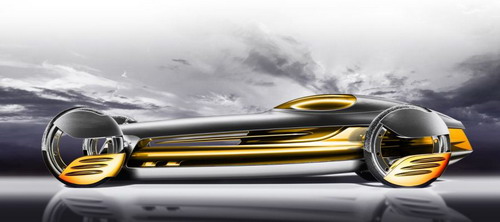
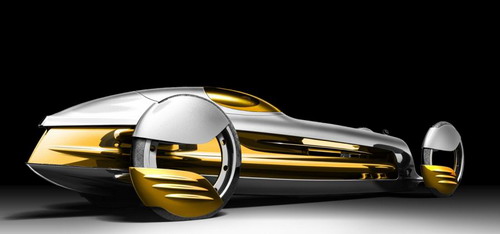
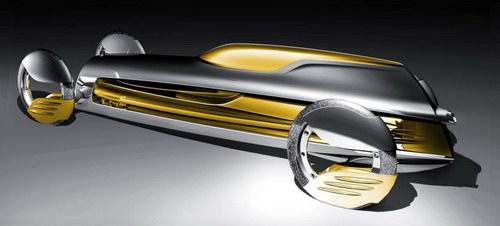
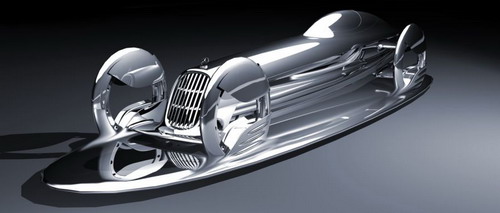
2057 Mercedes-Benz SilverFlow

Leadership luxury cars. Expensive cars of this camp. Makes him unable to stop thinking. Stop developing themselves. Because the other car camp. Are desired position of leadership. Search is committed to thinking in both technology development and technology to the most advanced model.


Last camp Mercedes-Benz. Offers you the latest ideas flowing pattern SilverFlow out that some novel also take the form or influence the car to improve the previous generation. Much of the novel. Material is used. He called it that. micro-metallic materials that can be managed. Shape control of electro-magnetic field with it. (See the movie as it installed a bunch means that when you park the car then. You transmute it. That it dissolves into a store that is enough to use force to drive it back to original shape. With that powerful magnetic field. It can transmute to pamper owners also take into ...! .. Oh do everything this. The only exception. Still do not have right now ... because it is a car of the future.