Showing posts with label hydrogen. Show all posts
Sunday, March 7, 2010
Concept car : Toyota Fine-S
Toyota displayed the Etios sedan and hatch concept car today at the Delhi Auto Expo and now you is the Toyota’s Fine-S Concept car.
Toyota claims it is the shape of the future that installed with hydrogen fuel-cell with low centre of gravity with independent 4-wheel torque control for exceptional maneuverability.
Labels:
4-wheel,
concept car,
Etios sedan,
fuel-cell,
gravity,
hatch,
hydrogen,
independent,
odd car
Sunday, September 13, 2009
Concept Car : BMW Snug
The concept vehicle by Hungarian designer David Raffai is called the BMW Sngu. Dvice says Raffai considers the vehicle a "social space with wheels." The concept car would have changeable side graphics and use green technologies including hydrogen fuel cells. The vehicle has a unique seating arrangement in the back, which is meant to allow more room and comfort for passengers.
Thursday, April 16, 2009
Concept Car : Jaguar C-XC
Jaguar C-XC is a stylish coupe 2 +2 designed by Philip Dean. The Jaguar C-XC concept car is powered by a hydrogen fuell cell and has a single-piece glass upper hull which covers the body of the vehicle and improves its aerodynamic profile.

The wheels are covered as well, increasing its aerodynamic efficiency. This supercar is made from materials which are kinder to the environment : vegetable tan leather and recycled bottles. Sci-fi or viable vehicle?


The wheels are covered as well, increasing its aerodynamic efficiency. This supercar is made from materials which are kinder to the environment : vegetable tan leather and recycled bottles. Sci-fi or viable vehicle?
Labels:
aerodynamics,
C-XC,
Concept Car,
hydrogen,
improves,
Jaguar,
Sci-fi,
vehicle
Wednesday, April 1, 2009
Concept Car : Embryo Eco Friendly
Concept Car Embryo is powered by fuel cells which uses clean fuels like hydrogen. It is completely ecological as it is made of recyclable aluminum and silicon materials used mostly for interior elements. Design wise, it looks like an organism, however safety wise too, it derives the same thought. Soft material is used for exterior while inside it has a protective layer to absorb the impact and keep the passengers safe. The safety system also acts as a communicating system for information like speed, distance etc. and if necessary auto pilot also reacts to avoid possible accidents. With all these safety and design features it surely is a winner in robotic era.More info on Tuvie
Saturday, March 28, 2009
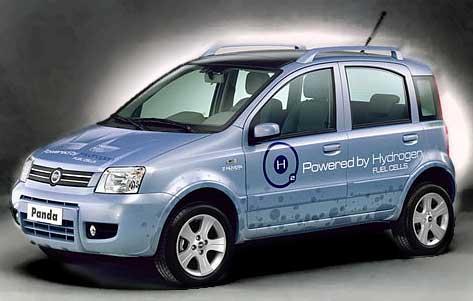
Concept Car : Fiat Panda Hydrogen
Fiat has certainly taken the time to look toward the future and the proof is in the Panda. The 2006 Fiat Panda Hydrogen Concept Car features Nuvera's new Andromeda II fuel cell stack. This hydrogen fuel cell allows the vehicle to have high power density and durability, as well as cold start capability.
When Nuvera Fuel Cells Inc., a high-tech developer out of Massachusetts and Italy, developed the Andromeda II, Fiat acknowledged the opportunity to have the first vehicle with this advancement.
The Fiat Panda Hydrogen Car's system has three main fuel cell components including an advanced turbo-blower, a cooling and humidifying system to correctly manage the reagent gases, and the auxiliary components set. This system allows the vehicle to function at a higher power and it allows for smooth handling.
The fuel cell and hydrogen tank in the Fiat Panda Hydrogen Car are located beneath the floor pan unlike the 2004 version of the Panda Hydrogen Car where the fuel cell stack was located underneath the hood. In the 2006 model, the transmission and alternating current three-phase asynchronous electric engine (60 kw) is still located underneath the hood. Fiat also states that the electrical power generation system is so efficient that 60-percent is available and just 20-percent maximum power.
The 2006 Fiat Panda Hydrogen Car uses a full power system, which means it lacks a drive battery for the accumulation of electrical energy. The Panda Concept receives enough energy directly from hydrogen tank to fuel cell to deliver the needed electricity to its high-torque electrical motors. This is a change from the 2004 Panda Hydrogen Concept, which used a hybrid system including a small electric battery pack to deliver more juice as needed and recover energy via regenerative braking.
The 2006 Panda Concept can accelerate from 0 to 30 mph in 5 seconds and can reach a top speed of about 78 miles per hour. Unlike other low-powered hydrogen cars, the Fiat Panda Hydrogen Car can make it up a 23-degree slope on take-off. The Panda Hydrogen Car also boasts a travel distance of more than 120 miles and refueling time less than 5 minutes.
The Fiat Panda Hydrogen Car indicates Fiat's advancement in pushing the research forward from the laboratory stage to the prototype research vehicle. The 2006 Fiat Panda Hydrogen Car was shown off in February of 2006 at the first ever Hydrogen Olympics in Turin, Italy, which coincided with the 2006 Winter Olympics in the same city. The Panda Hydrogen Concept is the result of a joint venture between the Fiat Research Centre, Fiat Auto and Fiat Powertrain Research & Technology division.
Expect to see some 2006 Panda Hydrogen Concept Vehicles start to rollout as test fleet vehicles around Italy and the rest of the European Union at the end of 2006.
When Nuvera Fuel Cells Inc., a high-tech developer out of Massachusetts and Italy, developed the Andromeda II, Fiat acknowledged the opportunity to have the first vehicle with this advancement.
The Fiat Panda Hydrogen Car's system has three main fuel cell components including an advanced turbo-blower, a cooling and humidifying system to correctly manage the reagent gases, and the auxiliary components set. This system allows the vehicle to function at a higher power and it allows for smooth handling.
The fuel cell and hydrogen tank in the Fiat Panda Hydrogen Car are located beneath the floor pan unlike the 2004 version of the Panda Hydrogen Car where the fuel cell stack was located underneath the hood. In the 2006 model, the transmission and alternating current three-phase asynchronous electric engine (60 kw) is still located underneath the hood. Fiat also states that the electrical power generation system is so efficient that 60-percent is available and just 20-percent maximum power.
The 2006 Fiat Panda Hydrogen Car uses a full power system, which means it lacks a drive battery for the accumulation of electrical energy. The Panda Concept receives enough energy directly from hydrogen tank to fuel cell to deliver the needed electricity to its high-torque electrical motors. This is a change from the 2004 Panda Hydrogen Concept, which used a hybrid system including a small electric battery pack to deliver more juice as needed and recover energy via regenerative braking.
The 2006 Panda Concept can accelerate from 0 to 30 mph in 5 seconds and can reach a top speed of about 78 miles per hour. Unlike other low-powered hydrogen cars, the Fiat Panda Hydrogen Car can make it up a 23-degree slope on take-off. The Panda Hydrogen Car also boasts a travel distance of more than 120 miles and refueling time less than 5 minutes.
The Fiat Panda Hydrogen Car indicates Fiat's advancement in pushing the research forward from the laboratory stage to the prototype research vehicle. The 2006 Fiat Panda Hydrogen Car was shown off in February of 2006 at the first ever Hydrogen Olympics in Turin, Italy, which coincided with the 2006 Winter Olympics in the same city. The Panda Hydrogen Concept is the result of a joint venture between the Fiat Research Centre, Fiat Auto and Fiat Powertrain Research & Technology division.
Expect to see some 2006 Panda Hydrogen Concept Vehicles start to rollout as test fleet vehicles around Italy and the rest of the European Union at the end of 2006.
Labels:
Andromeda II,
Concept Car,
Fiat,
FUTURE CAR,
hydrogen,
Nuvera,
Panda,
power,
vehicle
Sunday, March 22, 2009
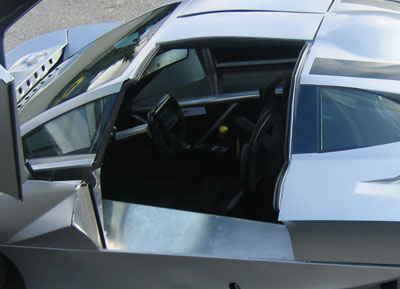
Concept Car: Aetek FYK
Make Aetek
Model FYK
Concept year 2006
Production year -
Engine natural/hydrogen gas
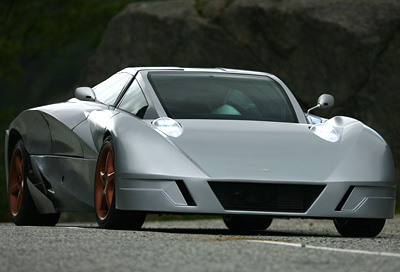
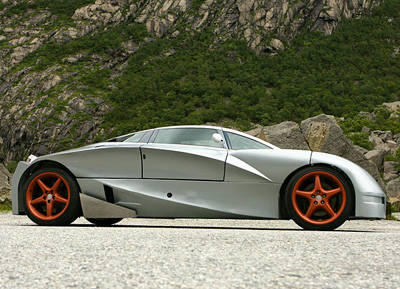
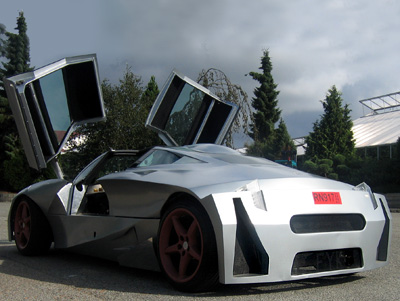
The FYK concept car was developed by Norwegian company Aetek, in conjunction with and sponsored by Statoil. The FYK was designed to highlight natural and hydrogen gas powered environmentally friendly vehicles.
Statoil provide the fuel for the FYK concept car. They see the natural and hydrogen gas mixture called NaturalHy (HCNG) which consists of 8-20% hydrogen, 92-80% compressed natural gas to be a commercially viable step towards a future potential all-hydrogen market.
The FYK concept car is built almost entirely from recyclable aluminium including body, chassis, wheels, engine and even interior elements. Exterior and interior design of the FYK concept show different aluminium shaping techniques and surface treatments.

Model FYK
Concept year 2006
Production year -
Engine natural/hydrogen gas
The FYK concept car was developed by Norwegian company Aetek, in conjunction with and sponsored by Statoil. The FYK was designed to highlight natural and hydrogen gas powered environmentally friendly vehicles.
Statoil provide the fuel for the FYK concept car. They see the natural and hydrogen gas mixture called NaturalHy (HCNG) which consists of 8-20% hydrogen, 92-80% compressed natural gas to be a commercially viable step towards a future potential all-hydrogen market.
The FYK concept car is built almost entirely from recyclable aluminium including body, chassis, wheels, engine and even interior elements. Exterior and interior design of the FYK concept show different aluminium shaping techniques and surface treatments.
Subscribe to:
Posts (Atom)